Your New Windshield Is Also a Camera Lens
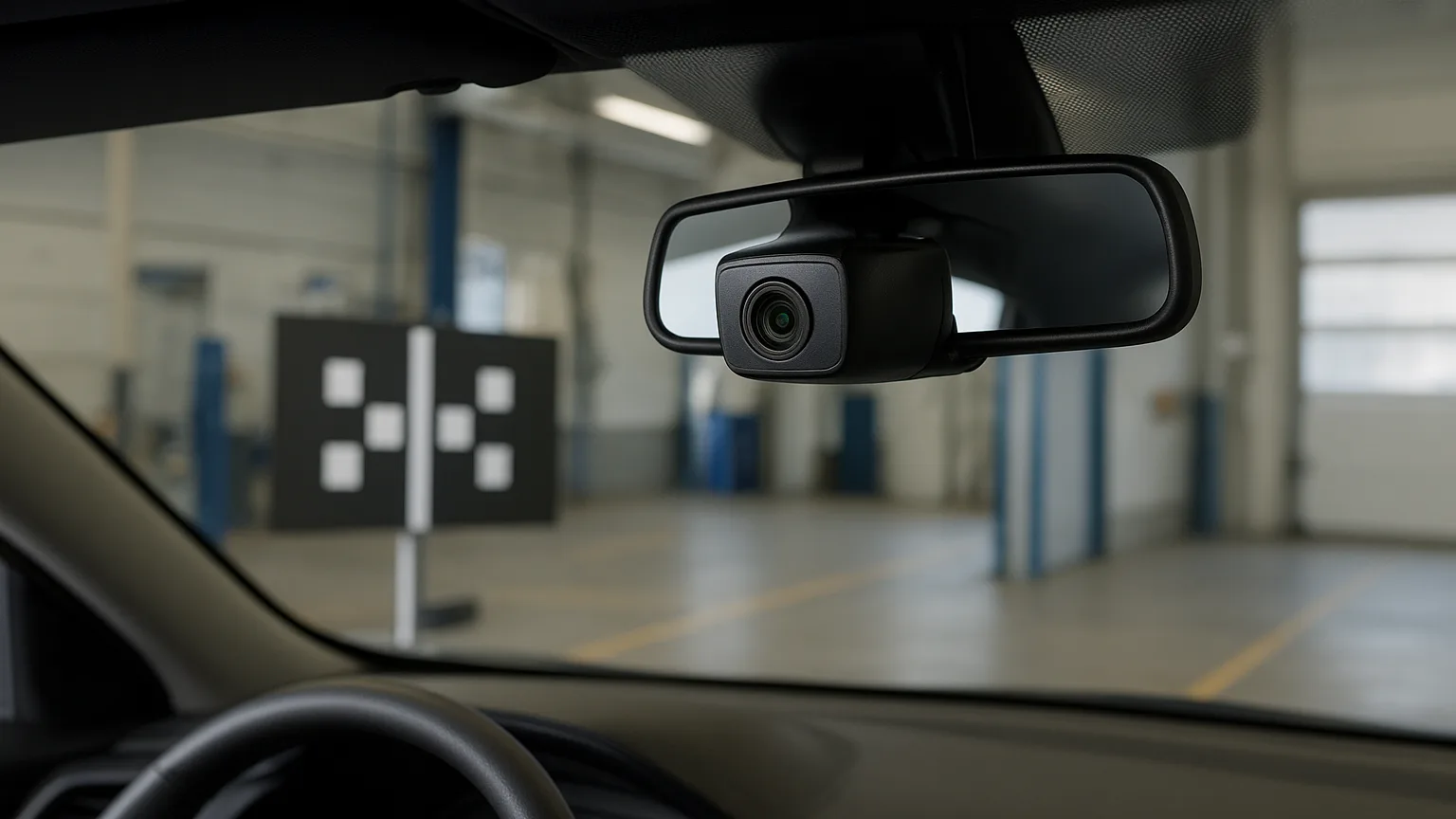
In a modern car, the windshield does more than keep out wind and bugs. A small camera sits behind the glass near the mirror, reading lane lines, signs, and the cars ahead. Lane keeping, auto braking, and adaptive cruise all count on what it sees.
When the glass is replaced, the camera moves too, and even a tiny shift matters. New glass can also bend light a little differently than the old pane. Without recalibration, your car aims its eyes in a slightly wrong direction. In summer, you might never notice. In winter, you will.
Many drivers already trust these systems too much, and the gap between what Autopilot names promise and what the hardware can do widens when a sensor is off.
A Winter Morning Through a Crooked Camera
7:10 a.m. Low Sun on Wet Pavement
The low January sun glares off the road. A well-aimed camera is built to handle this. A tilted one may point right into it. Lane lines fade, and lane keeping can switch off with little warning, or worse, nudge you toward the wrong line.
7:25 a.m. Sleet on the Front Bumper
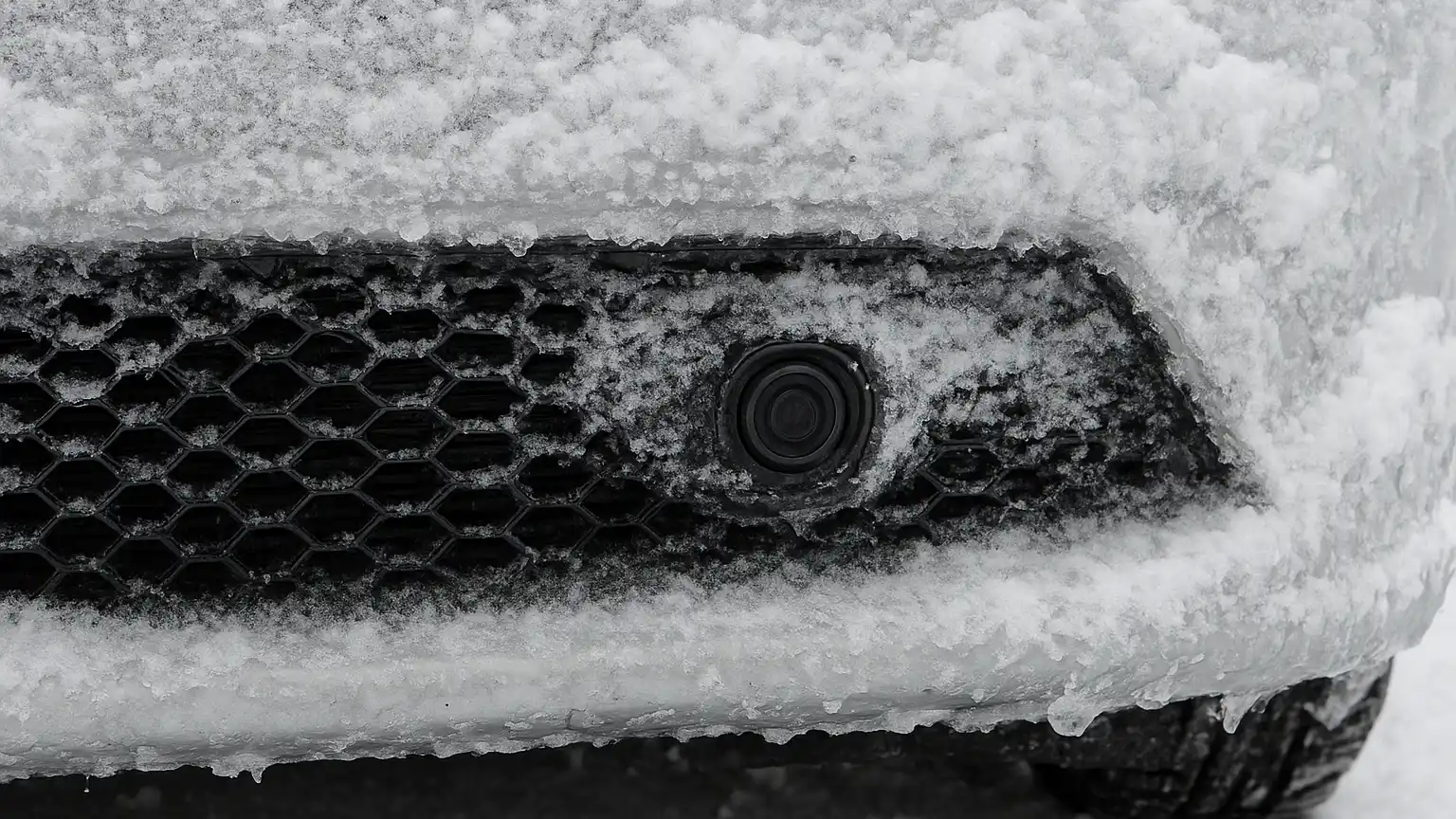
Your radar sensor lives behind the grille or bumper, where sleet packs on fast. A radar already a degree or two off has less room for error. Add ice and it may miss a slowing car ahead or brake hard for nothing.
7:40 a.m. Snow Over the Lane Lines
Now the paint is buried, and the camera must guess from road edges and tire tracks. If it doesn't know exactly where "straight ahead" is, the guess drifts, and that drift is how a car slides toward a curb or into the next lane.
Why One Degree Matters So Much
A camera off by just one degree looks almost two feet to the side at 100 feet ahead. A highway lane is about 12 feet wide, so that error eats a big part of your safety margin before snow, ice, or glare even show up.
Minor fender benders count too. A small bump can knock a radar bracket out of line with no visible damage. The paint looks fine. The sensor does not. After a parking lot tap, curb strike, or bumper work, the radar may need the same care as the windshield camera.
Signs Your Sensors Were Never Recalibrated
Not every shop calibrates after glass work. Watch for these clues:
- Lane assist feels "pushy" or keeps steering you toward one side.
- Warning lights for driver assist come and go, especially in rain or cold.
- Adaptive cruise brakes for cars in the next lane or for nothing at all.
- Collision alerts beep late or not at all.
- Your invoice from the glass shop says nothing about ADAS calibration.
- The car pulls after a bumper repair, even when the alignment checks out.
A glowing dash light is the loudest signal, and it may mean emergency braking could quit when you need it most.
Waiting Can Cost More Than a Repair Bill
If a driver-assist system fails and someone gets hurt, insurers and lawyers look at service records. A missing calibration after a windshield job can shift blame onto the owner. Even when the car was steering, the person in the seat is still expected to be in charge, and the rules about who pays after handoff crashes rarely favor a driver who skipped a known repair. Bad weather makes those handoffs more common, because the system gives up control right when the road gets tricky.
Open recalls work the same way. Every week a known fix sits undone becomes part of the story, and that delay is how a waiting recall weakens claims later on.
What Calibration Looks Like at Our Shop
There are two main kinds of calibration. Many cars need one, and some need both.
- Static calibration: The car sits on level ground in front of special targets while our scan tool tells the camera or radar exactly where center is.
- Dynamic calibration: A technician drives the car at set speeds on marked roads while the system learns its new position.
Most jobs take one to three hours. We check tire pressure and ride height first, since both change how the car "sees." We finish with a road test and a printed report for your records, which matters if you ever need to prove the work was done.
While the car is in, handle other winter checks like wipers, washer fluid, and the color of your oil, since cold starts are hard on an engine already running dirty.
Quick Answers for Busy Drivers
Do I really need calibration after a windshield replacement?
If your car has a camera mounted behind the glass, yes. Most carmakers require it after any windshield swap.
Can I just drive with driver assist turned off?
You can, but some systems, like auto braking, still run in the background. A misaimed sensor can still act on bad data.
Why calibrate now instead of after winter?
Snow, sleet, and low light are when these systems are most likely to fail. Fixing it in fall means your car is ready before the first storm.
Give Your Car Clear Eyes Before the First Flake
A new windshield or small bumper repair can quietly throw off the cameras and radar your car uses to stay in its lane and stop in time. Fixing it costs a few hours. Skipping it can cost a crash, an injury, and a fault claim that lands on you. At Done Right Auto Repair, we calibrate driver-assist systems the right way and give you a report to prove it. Book your visit before the snow shows up, and head into winter knowing your car sees the road as clearly as you do.