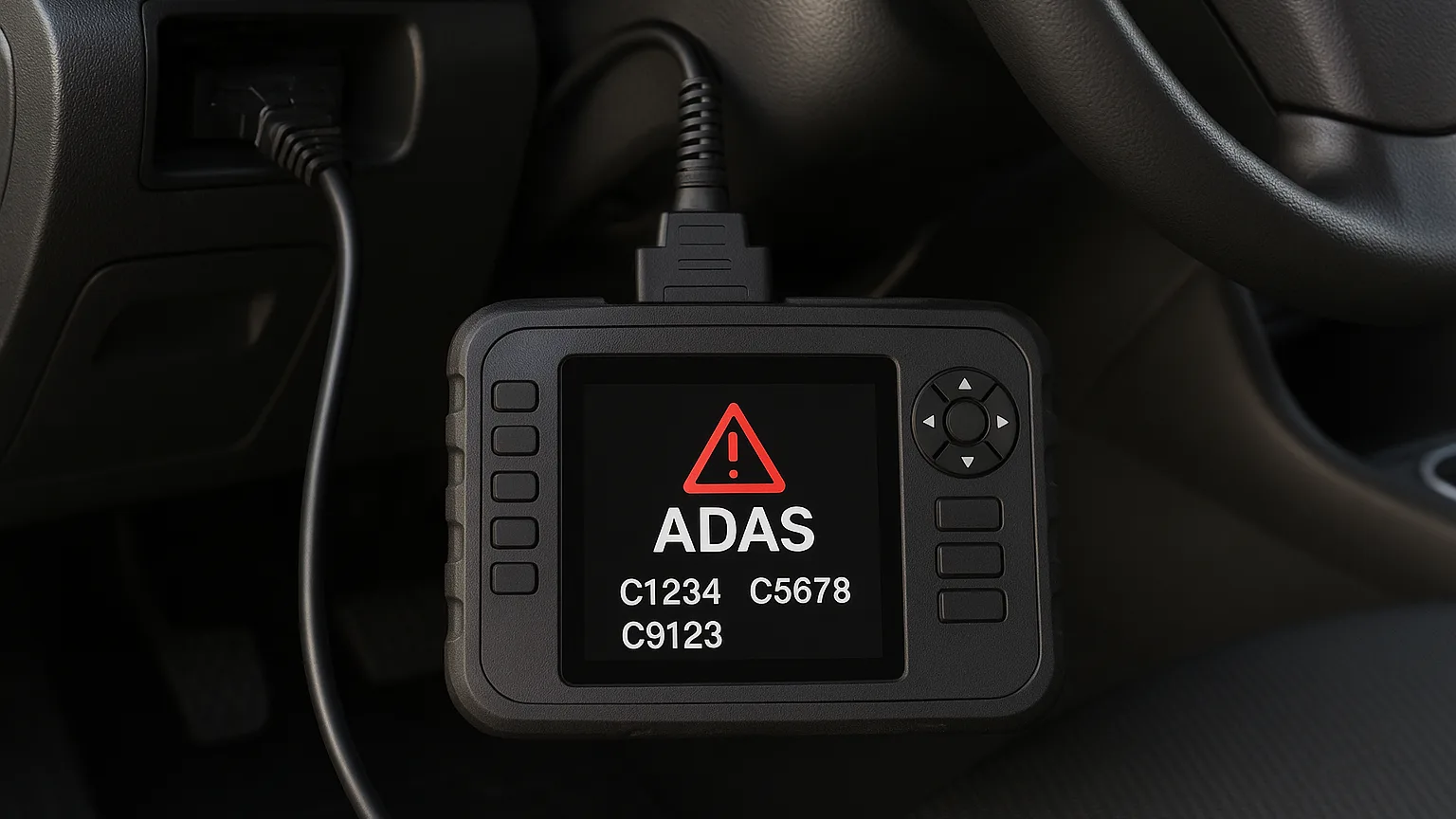
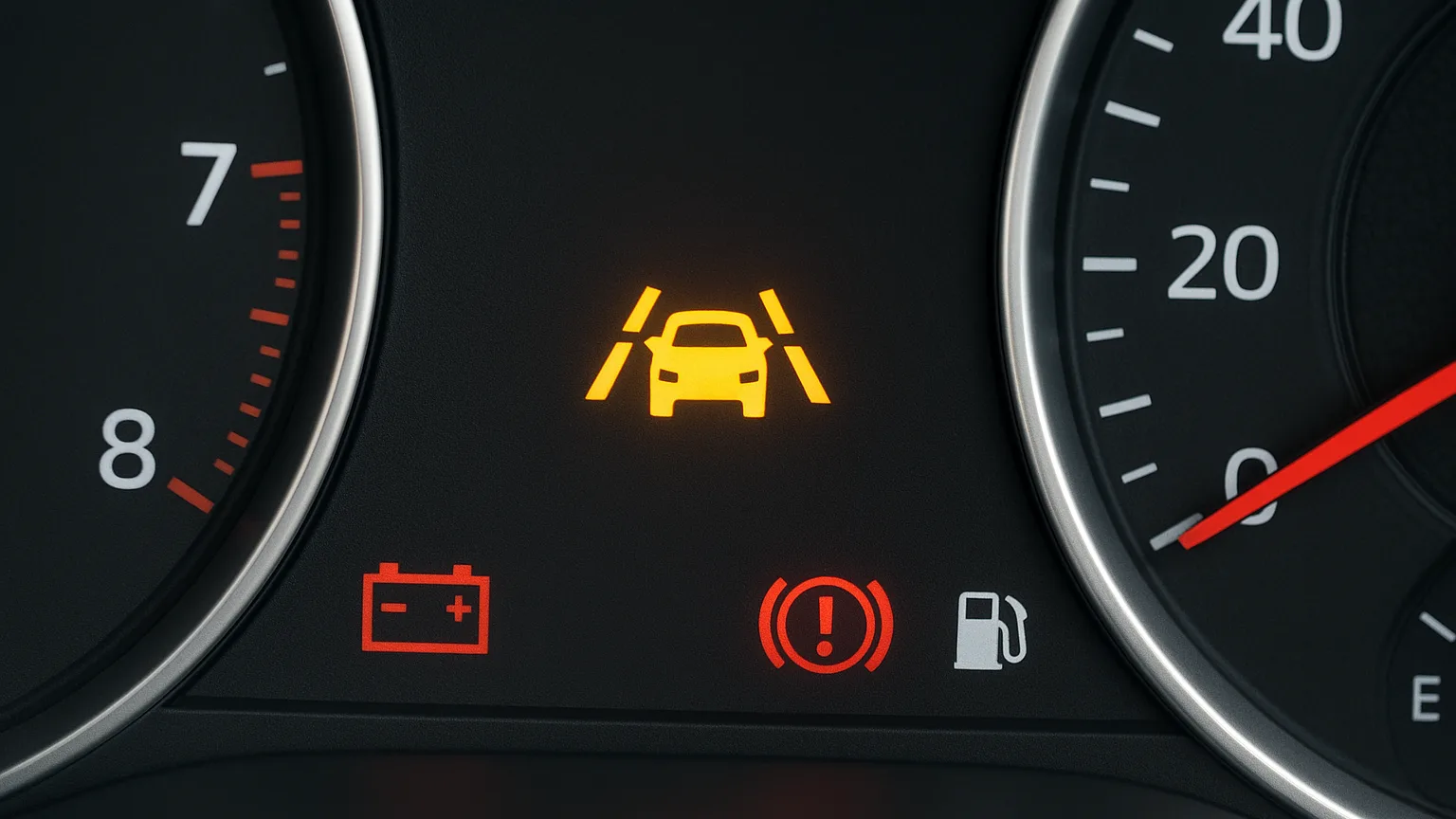
That little amber icon on your dash is easy to ignore. The car still drives. The radio still plays. But when an ADAS fault light comes on, your car is telling you something important: one or more of its safety helpers has stopped working. That can include automatic emergency braking, lane keeping, or adaptive cruise. Most cars don't announce it again later. They just stop helping.
Your Car Just Handed In Its Notice
Think of your driver assist systems as a quiet coworker who watches the road with you. An ADAS fault light is that coworker walking out the door. The car shows the warning once, then expects you to drive alone.
Here is the risky part. Many drivers have gotten used to the car catching their mistakes. They follow a little closer. They glance at a text a little longer. When the system is down, that habit has no backup. The car won't brake for the stopped truck ahead or nudge you back into your lane.
Read the Warning in Ten Seconds
Every brand words things a bit differently, but most messages fall into two groups.
Warnings That Mean a Feature Is Off Right Now
- "Pre-Collision System Unavailable" or "Collision Mitigation Off"
- "Lane Assist Not Available" or a crossed-out lane icon
- "Adaptive Cruise Unavailable" or cruise that will not set
- "Front Radar Blocked" or "Camera Blocked"
Warnings That Mean It May Quit Without Notice
- A light that flickers on and off over several days
- "Service Driver Assist" or "Check ADAS System"
- Lane keeping that pulls the wheel at odd times
- Emergency braking that slams on for shadows or bridges
The second group worries technicians most. A system that works one minute and fails the next gives you false trust. You never know which version of your car you are driving.
One Tuesday Morning, Two Ways
Picture Dana on her usual commute. Her "Pre-Collision Unavailable" message popped up last week after a pothole. She meant to get it checked. Traffic ahead stops fast while she looks at her GPS half a second too long. In one version of her morning, the system had been repaired. The car beeps, brakes hard, and she stops with a few feet to spare.
In the other, the radar is still knocked out of line from that pothole. No beep. No braking. She hits the car in front at 25 miles per hour, and two people go to urgent care with neck pain. The repair she put off would have taken under an hour.
Same driver. Same road. The only change was a visit to the shop.
How Small Faults Turn Into Big Ones
Most ADAS faults start small and grow because the cause is still there. Common triggers include:
- A bumped radar sensor from a parking tap, curb, or pothole
- A dirty or iced camera behind the windshield or in the grille
- A weak 12-volt battery that confuses the modules
- A new windshield that was never calibrated, a problem we cover in our guide to recalibrating after glass work
- Loose wiring or corroded plugs near the bumper
"A sensor that is off by one degree can be looking at the wrong lane at highway distance," says Marcus Bell, our lead diagnostic technician. "The car thinks it sees fine. It doesn't."
When a Skipped Repair Becomes an Injury Question
After crashes involving driver assist and self driving features, investigators now pull data from the car. That data can show when a fault code first appeared and how long the driver kept going with it.
As cars take on more of the driving, fault can shift between drivers, makers, and fleets, and the debate over who pays in driverless crashes shows how much those logs matter. For a private driver, a stored code from three weeks before a crash can be tough to explain.
Recalls add another layer. If your car has an open software or sensor recall, waiting can hurt you twice. We explain that risk in our piece on delayed self-driving recalls.
What a Quick Diagnostic Visit Looks Like
Most ADAS checks are faster than people expect. At Done Right Auto Repair, a typical visit follows these steps:
- Scan all modules to read stored and active fault codes
- Inspect sensors for damage, dirt, or loose mounts
- Test the battery and charging system, since low voltage causes many false faults
- Calibrate cameras or radar if they are out of line
- Road test to confirm each feature works again
While your car is in, we can also handle simple checks, like confirming what color your oil should be before your next change. One visit, fewer surprises.
What You Can Do Before You Arrive
Wipe the camera area on your windshield and the sensors on your bumper. Snow, mud, and bugs cause plenty of warnings. If the light goes away and stays gone, great. If it comes back, book a visit. Until then, drive like the car has no safety net: leave extra space, keep your eyes up, and turn off adaptive cruise.
Don't Let the Light Become the Last Warning
An ADAS fault light means your emergency braking, lane keeping, or adaptive cruise may already be off, or may drop out with no notice. Causes like a bumped sensor, a dirty camera, or a weak battery are usually quick to fix, often with just a short scan, a sensor check, and a calibration. Left alone, they can turn a near miss into a crash, and stored fault data can raise tough questions afterward about why the warning was ignored.
If that amber light is glowing on your dash today, treat it like a message from your car's best safety partner. Bring it to Done Right Auto Repair, and get back to driving with the backup you paid for.